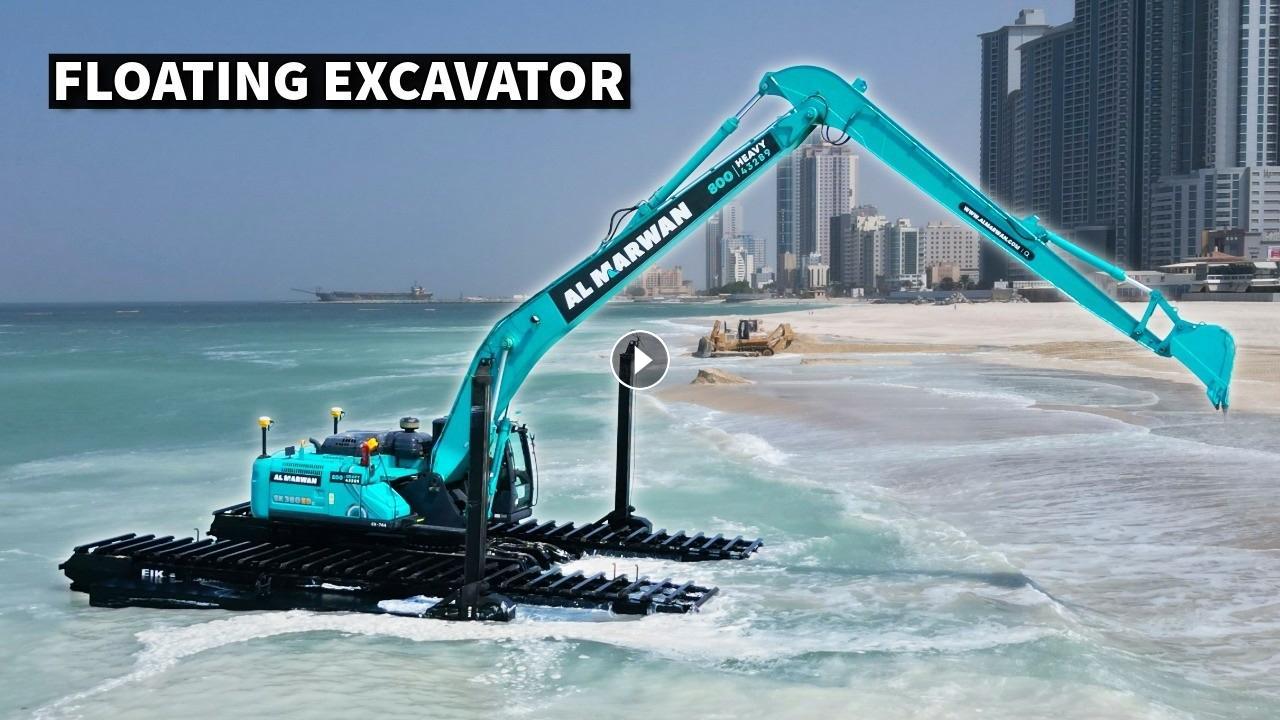
How Excavators Are Built to Work in the Ocean
Excavators are among the most versatile construction machines in the world, but working in the ocean presents challenges that standard excavators simply cannot handle. Saltwater, strong currents, unstable seabeds, and constant exposure to moisture require specialized engineering. That's why manufacturers have developed marine excavators capable of operating in some of the harshest environments on Earth.
Built to Resist Saltwater Corrosion
One of the biggest threats to any machine working in the ocean is corrosion. Saltwater quickly damages exposed metal surfaces, electrical systems, and hydraulic components. Marine excavators are built using corrosion-resistant steel, stainless-steel hardware, and heavy-duty protective coatings. Critical components are sealed to prevent saltwater from entering the machine, greatly extending its service life.
Waterproof Hydraulic Systems
Hydraulics are the heart of every excavator. Ocean-ready excavators use specially sealed hydraulic cylinders, hoses, and fittings that prevent water contamination. Many machines also use marine-grade hydraulic oil that maintains performance even under harsh environmental conditions.
Reinforced Undercarriage
Working on soft seabeds requires exceptional stability. Marine excavators often feature extra-wide tracks or amphibious pontoons that distribute the machine's weight over a larger surface area. This design prevents the excavator from sinking into mud or sand while improving traction in shallow water.
Powerful Cooling Systems
Unlike standard excavators, machines operating near the ocean face additional cooling challenges. Advanced cooling systems are designed to prevent overheating while keeping seawater away from sensitive engine components. Air filtration systems are also upgraded to reduce the harmful effects of salty air.
Sealed Electrical Components
Modern excavators rely heavily on electronic controls and sensors. Marine models use waterproof connectors, sealed wiring harnesses, and protected control modules. These systems ensure reliable operation even during heavy rain, waves, or prolonged exposure to humid environments.
Specialized Attachments
Ocean construction often requires unique tools. Marine excavators can be equipped with:
-
Heavy-duty digging buckets
-
Rock breakers
-
Dredging buckets
-
Clamshell grabs
-
Hydraulic shears
-
Long-reach booms extending over 20 meters
These attachments allow operators to perform underwater excavation, shoreline reinforcement, harbor maintenance, and environmental restoration projects.
Amphibious Excavators
Some of the most impressive machines are amphibious excavators. Instead of relying only on steel tracks, these excavators use floating pontoons that allow them to travel across marshes, swamps, shallow lakes, and coastal waters. They can even float while operating, making them ideal for difficult terrain where conventional machines cannot work.
Common Ocean Applications
Marine excavators are used for a wide variety of projects, including:
-
Port and harbor construction
-
Beach restoration
-
Dredging rivers and canals
-
Building seawalls
-
Offshore pipeline installation
-
Bridge foundation work
-
Coastal erosion control
-
Wetland restoration
Their versatility makes them essential equipment for both construction companies and environmental projects.
Safety in Marine Operations
Working in the ocean requires strict safety procedures. Operators must consider changing tides, wave conditions, underwater obstacles, and unstable ground. Many marine excavators are equipped with GPS positioning systems, depth monitoring technology, and stability sensors to improve safety and precision.
The Future of Marine Excavators
Technology continues to transform marine construction equipment. New excavators feature hybrid power systems, improved fuel efficiency, remote operation, and even autonomous assistance. Manufacturers are also developing electric-powered marine excavators to reduce emissions and minimize environmental impact during coastal projects.
Conclusion
Ocean construction demands machines capable of surviving one of the harshest environments on Earth. Through corrosion-resistant materials, waterproof systems, reinforced structures, and specialized engineering, marine excavators have become indispensable for modern coastal infrastructure. Whether building ports, protecting shorelines, or restoring wetlands, these powerful machines demonstrate that engineering innovation can overcome even the toughest natural conditions.
- Category
- Construction & Machinery

Up Next
-
15:18

The Extreme Solution US Navy Found to Deal With Enemy Drones in Middle of the Ocean
-
02:39
Kobelco Excavators Working in Ireland
-
12:01
Life Inside World’s Largest 13 Billion $ Aircraft Carrier in Middle of the Ocean
-
09:16
A Day in Life of a Container Ship in Middle of the Ocean
-
1:48:57
Transportation Of Huge Wheel Loader, Bulldozer And Excavators - Mega Machines Movie
-
12:02
Life Inside Billion $ US Amphibious Assault Ships in Middle of the Ocean
-
10:13
I was SHOCKED when see this dangerous heavy equipment destroy everything. Incredible excavators
-
08:57
Life inside Giant Offshore Rigs in Middle of the Ocean
-
16:46
Two Excavators stuck in deep clay - Heavy Recovery - Terribärgarn, Sweden
-
08:22
Why America's V-22 Osprey Just Keeps Getting Better - Able to Fly Across the Pacific Ocean
-

CARRETERA - TROCHA CARROZABLE - Tractor oruga D7G - CATERPILLA
-
15:24

Reversing Trailer and Loading my Rig
-
07:31

Agricultural assistants and tractor gross
-
10:38

NEXAT: The new and revolutionary 1100 HP tracto
-
08:03
Starting a TD25 Dozer after 20 years of sitting
-
10:50

Crazy Cow Destroys Gate
-
10:37

Gigantic 265 Ton US Aircraft Takes Off With Full Thrust in Middle of the Desert
-
02:38
MOWING OF EMBANKMENTS AT 50% SLOPE WITH REMOTE CONTROL MOWER EQUIPPED WITH A WINCH
-
03:04

Awesome F-22 Raptor Falls/freefall from sky in full control 4K
-
08:01

World Best Jersey Cows Farm 80 Litter Milk Per Day ll Biggest Udder Cow ll Jersey Dairy Farm